Customs HS Code Lookup Official Sources & Verification Methods.
Guide on customs HS code lookup from official sources, how to check HS codes, and cross-reference results before declaring.
An HS Code is used to classify goods in international trade. In Vietnam, HS codes appear in customs documents, import-export tariff schedules and trade-management policies.
An HS code follows a structure from chapter, heading, subheading to the detailed code under Vietnam's import-export catalogue. When declared correctly, businesses can determine the right duty rate, check whether the goods are subject to specialised controls, and reduce the risk of tax recollection or penalties.
Conversely, declaring the wrong HS code can lead to incorrect duties, loss of FTA preferences, supplementary document requests, clearance delays or administrative sanctions.
Official sources for customs HS code lookup
The most critical source for customs HS code lookup is the tariff-schedule and HS search system of Vietnam Customs. This is where businesses should verify codes before formal declaration.
Additionally, cross-check with the Vietnam Trade Repository (VNTR), relevant legal documents and trade-law libraries. However, external tools should only be treated as references. When discrepancies arise, businesses should prioritise data from customs authorities, Vietnam's import-export nomenclature and current legal texts.
Another supporting source is GEXIM AI, a tool that suggests initial HS codes from product descriptions or images. GEXIM is useful when users don't know which chapter to start from, need to quickly screen many products, or want a shortlist of suggested codes to cross-check against official sources.
Đối chiếu mã HS nhanh chóng, tiện lợi bằng mô hình AI hỗ trợ đắc lực Gexim.
How to look up customs HS codes
To properly look up HS codes on customs sources, follow this workflow:
How to verify HS codes and cross-check results
When verifying an HS code, cross-check in 4 layers.
Bản chất hàng hóa
Đảm bảo mô tả kỹ thuật của sản phẩm hoàn toàn trùng khớp với định nghĩa trong danh mục mã HS (chất liệu, công dụng, cấu tạo...).
Đối chiếu đa nguồn
Kiểm tra chéo mã HS giữa cổng Hải quan, VNTR và GEXIM AI. Tìm hiểu kỹ và làm rõ nguyên nhân nếu có sự khác biệt giữa các nguồn.
6 quy tắc hài hòa
Áp dụng tuần tự 6 quy tắc của WCO đối với các hàng hóa phức tạp, nhiều chất liệu, bộ sản phẩm hoặc tháo rời.
Kiểm tra rủi ro quan thuế
Đánh giá tác động của mã HS đối với nghĩa vụ nộp thuế (biểu thuế FTA), điều kiện xin chứng nhận xuất xứ (C/O) và rủi ro truy thu thuế.
Check mã HS code nhanh bằng GEXIM AI
Với những sản phẩm phức tạp, nhập mô tả hoặc tải ảnh lên GEXIM AI giúp lọc danh sách mã gợi ý nhanh chóng. GEXIM AI đặc biệt hiệu quả khi check mã cho nhiều mặt hàng cùng lúc, tiết kiệm tối đa thời gian phân loại.
Check HS codes with GEXIM AI
For products with long descriptions, many technical specs or unclear nature, businesses can use GEXIM AI as an initial screening step.
Users can enter a product description or upload images so the system suggests potentially matching HS codes. GEXIM AI shortens the code-filtering time, especially when checking codes for many items at once.
However, AI results should be used as an analytical and cross-referencing aid, not as a full replacement for official customs sources. The best practice is to use GEXIM for a shortlist, then verify on the customs system, tariff schedule and relevant legal documents.
Common mistakes when looking up HS codes
When should you consult an expert or customs authority?
If the product has a complex construction, multiple functions, multiple materials or high value, businesses should seek the opinion of customs experts, a licensed customs broker or the competent customs authority.
When greater certainty is needed, businesses can prepare technical dossiers, catalogues, photos, samples and related documents for a more precise classification consultation.
FAQ
If the HS code on Customs and GEXIM is different, which should I trust?+
Can I be penalised for declaring the wrong HS code?+
When the search returns several similar HS codes, which one should I pick?+
Conclusion
Customs HS code lookup should not stop at entering a keyword and picking the closest match. To mitigate risk, businesses must verify HS codes from official sources, cross-check across multiple sources, read product descriptions carefully and review associated policies.
GEXIM AI can help businesses check HS codes faster from descriptions or product images, especially during the initial filtering and cross-referencing step. However, before declaration, the HS code should still be re-verified against customs sources and relevant legal bases.
Tags
More articles
View all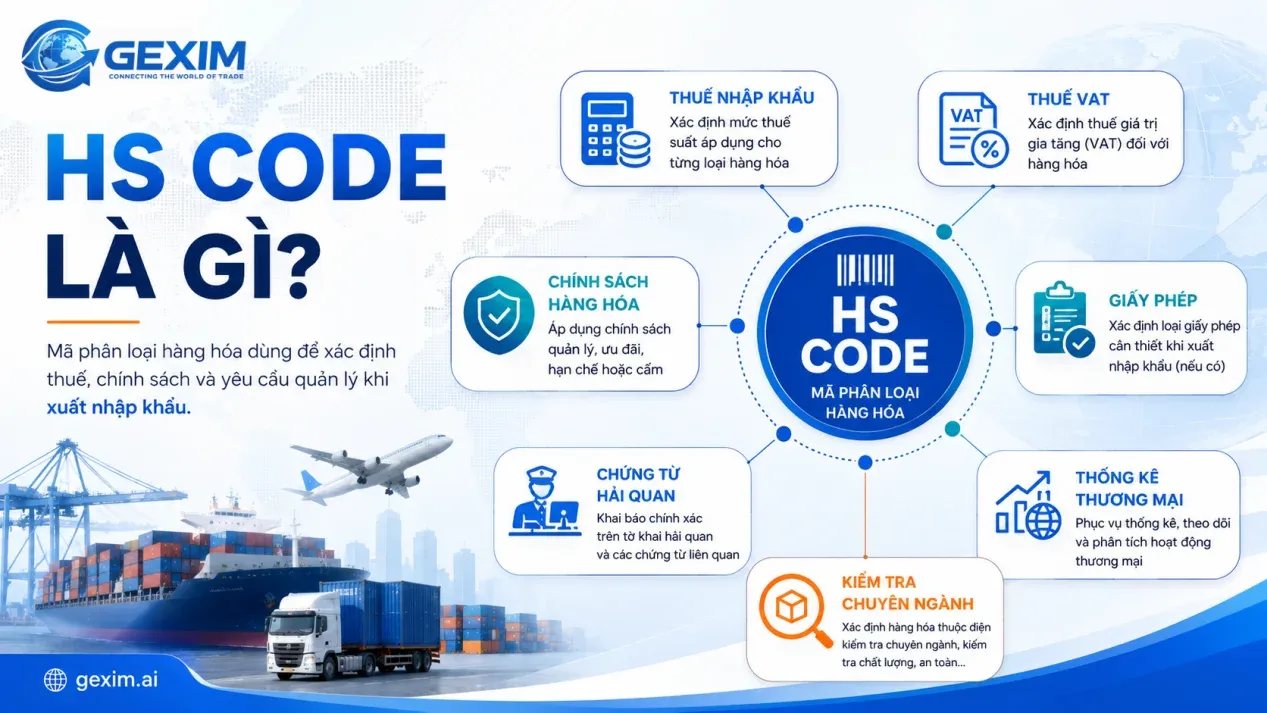
What is an HS Code? Structure and usage in import & export
An HS Code is a product classification code used in trade. Learn about the HS code structure, its digits, and its impact on duties and trade policies.
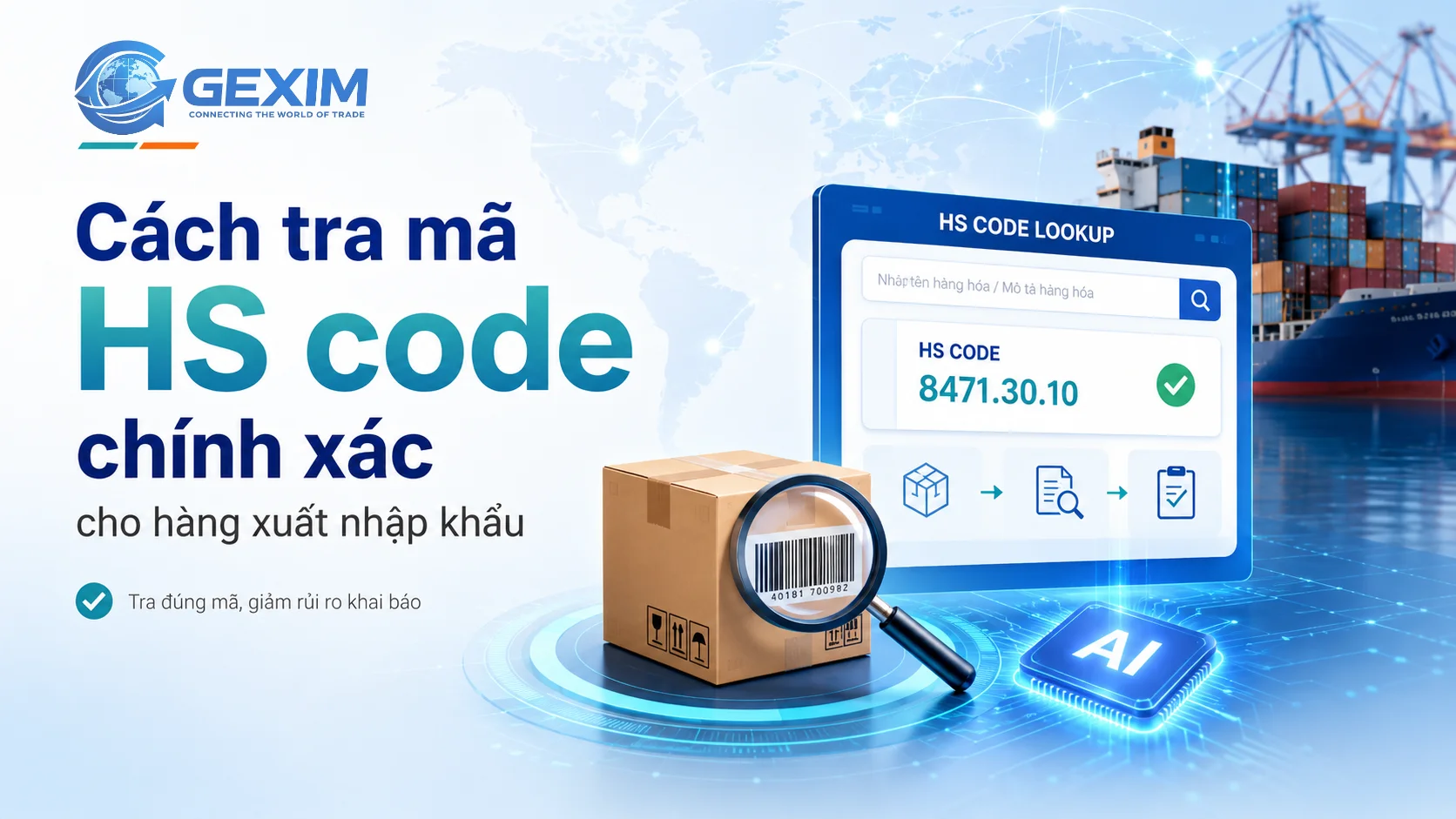
How to look up HS codes accurately for import & export goods
A 5-step HS lookup workflow, official sources to use, common mistakes and how to apply AI to reduce classification errors.

Top online HS code lookup websites and how to verify reliable sources
Recommended reputable websites for online HS code lookup such as Customs, VNTR, WCO, WTO, USITC, Access2Markets and how to use GEXIM for faster check.
Suggested content you might be interested in
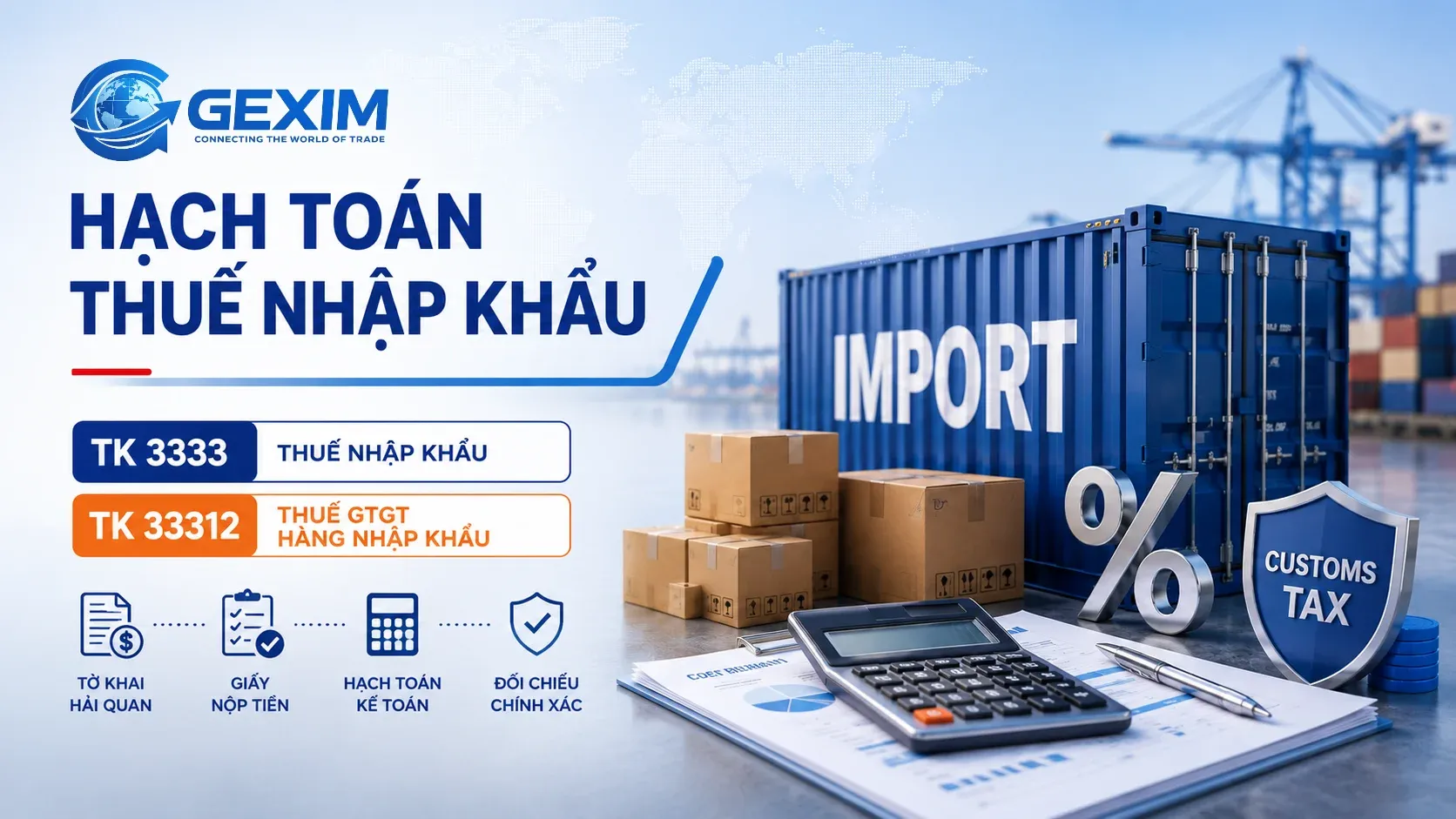
Accounting for import duty and import VAT: Account 3333, Account 33312
Detailed guide on accounting for import duty (Account 3333), import VAT (Account 33312), tax payments, and accounting reconciliation.

How to calculate import duty on goods entering Vietnam: formulas, examples and a checking workflow
The import-duty formula, how to set the dutiable value, how import VAT is computed, worked examples and a pre-declaration checking workflow.
What is the import customs value? Determining the customs value, CIF, FOB and exchange rates
What the import customs value is, why not to use the raw invoice price, how to determine it from CIF/FOB, the customs exchange rate and a document checklist before computing duty.