Looking up import duty by HS code how to read MFN, FTA, and VAT.
Guide on looking up import duty by HS code, reading MFN, FTA preferential rates, VAT, and calculating preliminary taxes payable before importing.
You have the HS code, but what is the import duty rate? This question almost always follows an HS lookup. However, the payable tax depends not only on the product code but also on the goods' origin, free trade agreements (FTAs), certificate of origin (C/O) and other taxes beyond import duty.
This article guides you on how to look up import duty by HS code, read MFN duty, FTA preferential rates, VAT and calculate preliminary taxes payable before importing.
What is looking up import duty by HS code?
Looking up import duty by HS code is the process of using product classification codes to determine tax rates and policies related to imported goods. The HS code is the vital foundation to identify which group the goods belong to, how much import tax they bear, and whether they can enjoy tariff preferences under any free trade agreement.
However, three concepts must be clearly distinguished:
In other words, to calculate tax accurately, you first need a correct HS code. If the HS code is wrong, the entire subsequent tax rate can also be wrong. If you are not sure about the product's HS code, you can refer to the article on how to look up HS codes or use the AI HS code search tool on GEXIM to check quickly before calculating.
What to prepare before looking up duty by HS code?
Before looking up import duty, you should prepare all input information. This makes the search results more accurate and limits confusion between tax lines.
How to read tax types when looking up by HS code
When looking up taxes by HS code, you will often encounter several different tax types. Each tax type has its own meaning and directly affects the total import cost.
1. Thuế suất MFN (Ưu đãi)
Áp dụng cho hàng hóa nhập khẩu từ các quốc gia và vùng lãnh thổ thực hiện đối xử tối huệ quốc (MFN/WTO) với Việt Nam. Đây là mức thuế tham chiếu cơ bản nhất.
2. Thuế suất FTA (Ưu đãi đặc biệt)
Áp dụng cho hàng hóa nhập khẩu từ các nước có Hiệp định thương mại tự do với Việt Nam (như ATIGA, EVFTA, CPTPP...) và đáp ứng đủ các điều kiện như có C/O hợp lệ, vận chuyển thẳng.
3. Thuế giá trị gia tăng (VAT)
Thông thường là 10%, một số mặt hàng nông sản, y tế hưởng 5% hoặc được miễn thuế. Công thức: VAT = (Trị giá tính thuế + Thuế NK) x Thuế suất VAT.
4. Thuế phòng vệ / tiêu thụ đặc biệt khác
Chịu thuế tiêu thụ đặc biệt (rượu, bia, ô tô, điều hòa...) hoặc thuế chống bán phá giá (CBPG) thì cần cộng thêm vào tổng thuế phải nộp của lô hàng.
Ví dụ tính thuế sơ bộ từ mã HS
Giả sử hàng hóa có trị giá tính thuế là 100.000.000 VNĐ, thuế suất MFN là 10%, thuế suất FTA ưu đãi đặc biệt là 0% (khi có C/O hợp lệ) và thuế VAT là 10%.
Sở hữu Chứng nhận xuất xứ (C/O) chuẩn chỉ giúp doanh nghiệp tối ưu hóa chi phí cực lớn. GEXIM AI hỗ trợ đối soát biểu thuế FTA và điều kiện xin C/O cho từng mã HS.
GEXIM hỗ trợ tra nhanh mã HS, tự động tính thuế sơ bộ và cảnh báo chính sách rủi ro.
FAQ
Must I have an HS code before I can look up import duty?+
Can I enjoy the FTA tax rate without a C/O?+
How is import VAT calculated?+
Does looking up import duty by HS code replace customs consulting?+
Conclusion
Looking up import duty by HS code should not stop at a single duty rate figure. Businesses must verify the correct HS code, cross-check MFN duty, check FTA eligibility, confirm VAT and calculate a preliminary total payable.
For complex goods with multiple materials or specialised functions, a more thorough review is warranted before formal declaration. GEXIM AI supports quick HS lookup, preliminary duty calculation and timely policy alerts.
Tags
More articles
View all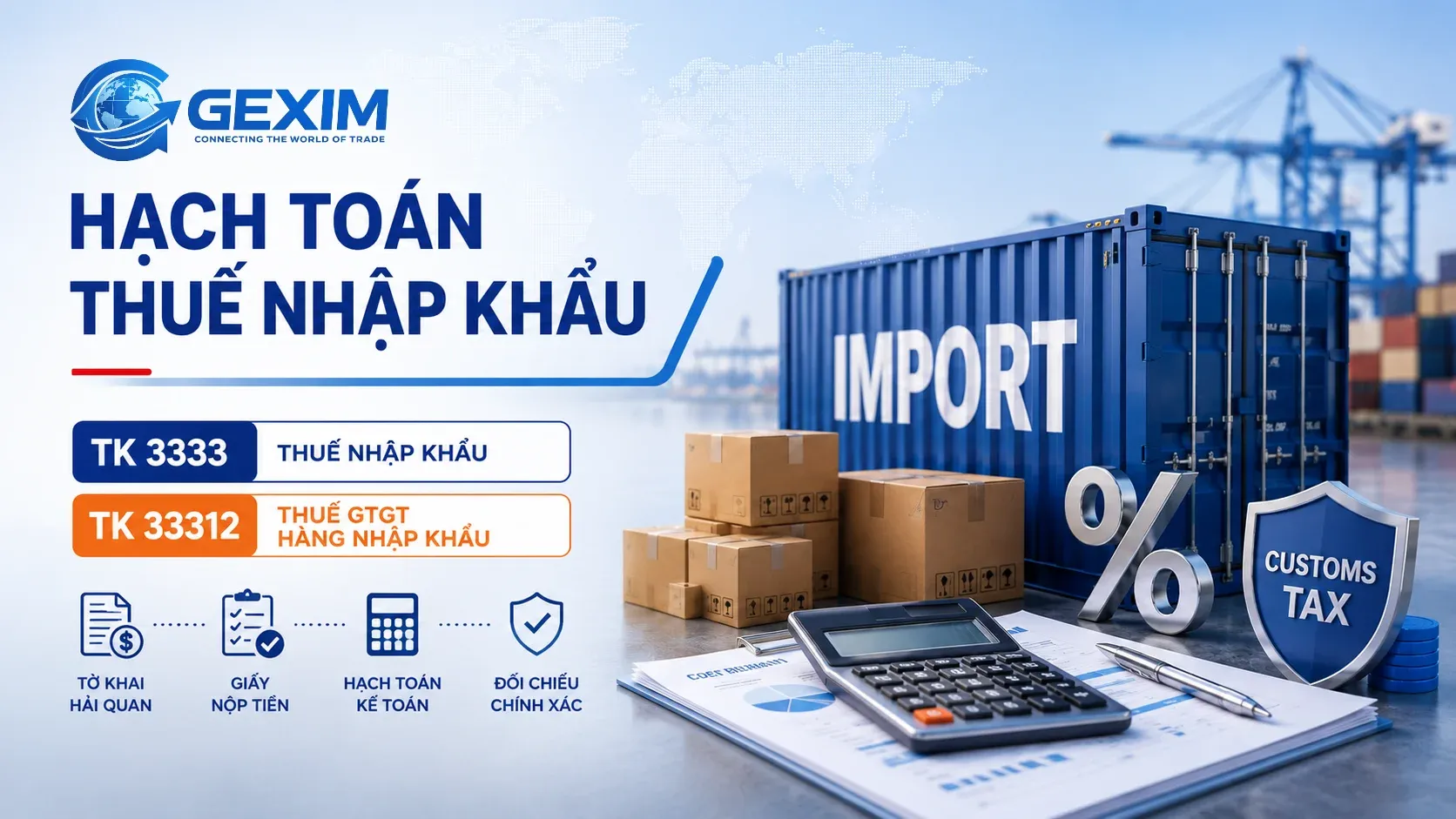
Accounting for import duty and import VAT: Account 3333, Account 33312
Detailed guide on accounting for import duty (Account 3333), import VAT (Account 33312), tax payments, and accounting reconciliation.

How to calculate import duty on goods entering Vietnam: formulas, examples and a checking workflow
The import-duty formula, how to set the dutiable value, how import VAT is computed, worked examples and a pre-declaration checking workflow.
What is the import customs value? Determining the customs value, CIF, FOB and exchange rates
What the import customs value is, why not to use the raw invoice price, how to determine it from CIF/FOB, the customs exchange rate and a document checklist before computing duty.
Suggested content you might be interested in

What is an HS Code? Structure and usage in import & export
An HS Code is a product classification code used in trade. Learn about the HS code structure, its digits, and its impact on duties and trade policies.

How to look up HS codes accurately for import & export goods
A 5-step HS lookup workflow, official sources to use, common mistakes and how to apply AI to reduce classification errors.
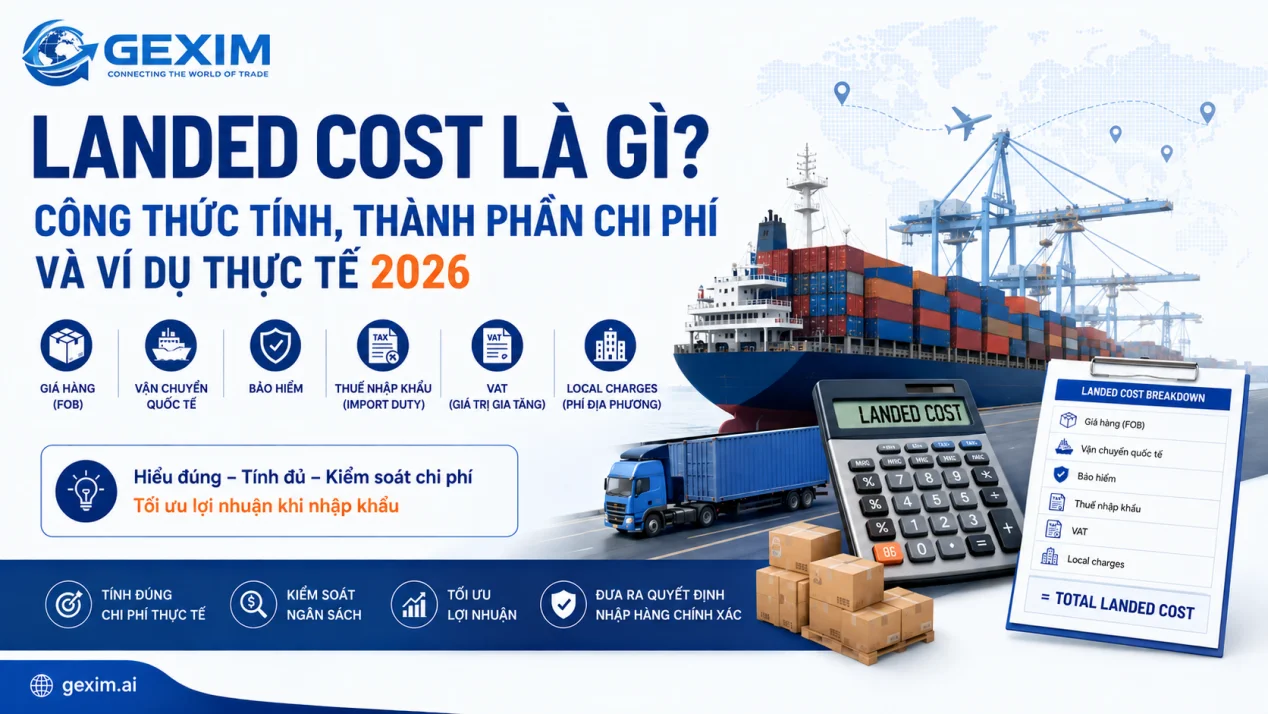
What Is Landed Cost? Formula, Components and an Import Cost Example
What landed cost is, the import cost formula, the cost components, a real example and how to optimize landed cost with AI.